

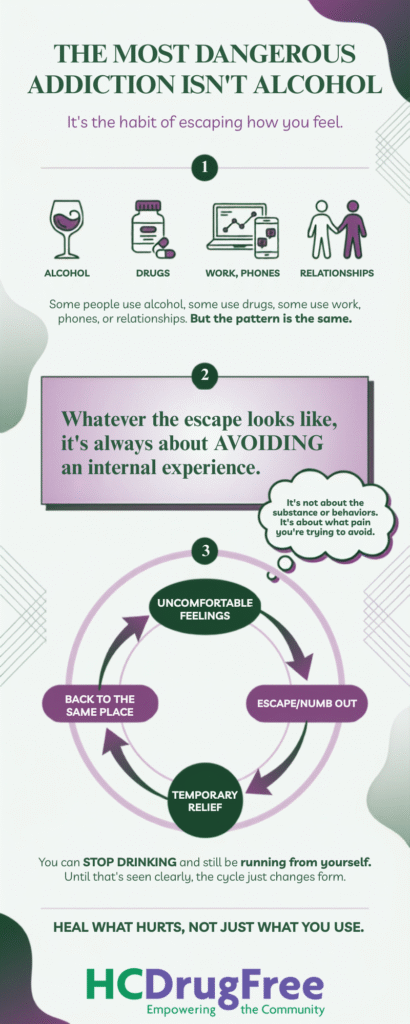
When people think about addiction, they often picture alcohol or drugs. While substances can lead to addiction, the underlying pattern is often much broader. Some people may cope with difficult emotions by turning to work, social media, gambling, relationships, or other behaviors that provide temporary relief.
The common thread is not the substance or behavior itself—it’s the attempt to escape uncomfortable thoughts or feelings.
Many people experience a cycle like this:
- Uncomfortable emotions or stress
- Seeking temporary relief through a substance or behavior
- Feeling better for a short time
- Returning to the same unresolved emotions, repeating the cycle
Breaking this pattern begins with recognizing what’s driving it. Developing healthy coping strategies, building supportive relationships, practicing self-care, and reaching out for professional help when needed can make a lasting difference.
Prevention isn’t just about avoiding substances—it’s also about building resilience, addressing mental health, and learning healthy ways to cope with life’s challenges before problems become more serious.
Healing starts by addressing the root cause, not just the symptoms. By supporting mental wellness and encouraging healthy coping skills, we can help prevent substance misuse and promote lifelong well-being.



Sorry, comments are closed for this post.