When someone is experiencing an overdose, every second matters. Yet many people hesitate to call 911 because they are worried about getting themselves or someone else into legal trouble. Maryland’s Good Samaritan Law was created to address this concern and encourage people to seek emergency help without delay.
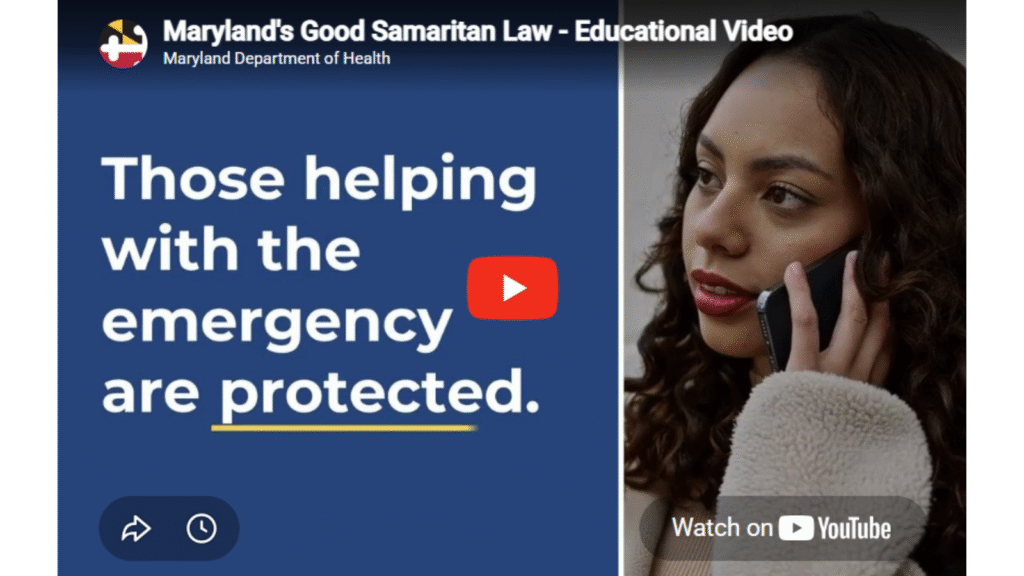
The Maryland Department of Health recently released a new educational video to help residents understand how the law works, what protections it provides, and where its limits begin.
What Does Maryland’s Good Samaritan Law Do?
Maryland’s Good Samaritan Law provides certain legal protections for individuals who seek emergency medical assistance during an overdose. The law is designed to remove barriers that might prevent someone from calling 911 when help is needed.
Under the law, certain individuals may be protected from charges related to:
- Possessing or using a controlled dangerous substance
- Possessing or using drug paraphernalia
- Providing alcohol to minors
In addition, calling 911 for an overdose emergency will not affect a person’s parole or probation status.
The goal is simple: save lives by encouraging people to call for help immediately during a suspected overdose.
What Doesn’t the Law Cover?
While the law offers important protections, it does have limitations.
The Good Samaritan Law:
- Does not protect people who witness a medical emergency but do not assist or seek help
- Does not apply to open warrants
- Does not apply to immigration matters
- Does not apply to university disciplinary policies
- Does not apply to drug felonies or crimes not specifically covered by the law
- Does not prevent law enforcement from conducting investigations or collecting evidence
Understanding both the protections and limitations can help individuals make informed decisions during an emergency.
Prevention Still Matters
Knowing your rights during an overdose emergency is important, but prevention remains the best strategy.
Families can help reduce the risk of substance misuse by practicing safe storage. Prescription medications, over-the-counter medications, alcohol, cannabis products, and other potentially harmful substances should be stored securely and out of reach of youth. Unused or expired medications should be properly disposed of through authorized medication drop boxes or take-back events.
Open communication about substance use, overdose risks, and how to respond in an emergency can also help save lives.
Learn More
The Maryland Department of Health’s Good Samaritan Law video, fact sheets, and additional overdose prevention resources are available through Maryland’s overdose prevention website. Resources include information on:
- Naloxone and overdose response
- Fentanyl and emerging drug trends
- Maryland’s Good Samaritan Law
- 988, the Suicide & Crisis Lifeline
- Substance use support resources
- Reducing stigma related to substance use
Understanding the law, recognizing the signs of an overdose, and knowing when to call 911 can help protect the health and safety of our communities.


Sorry, comments are closed for this post.