
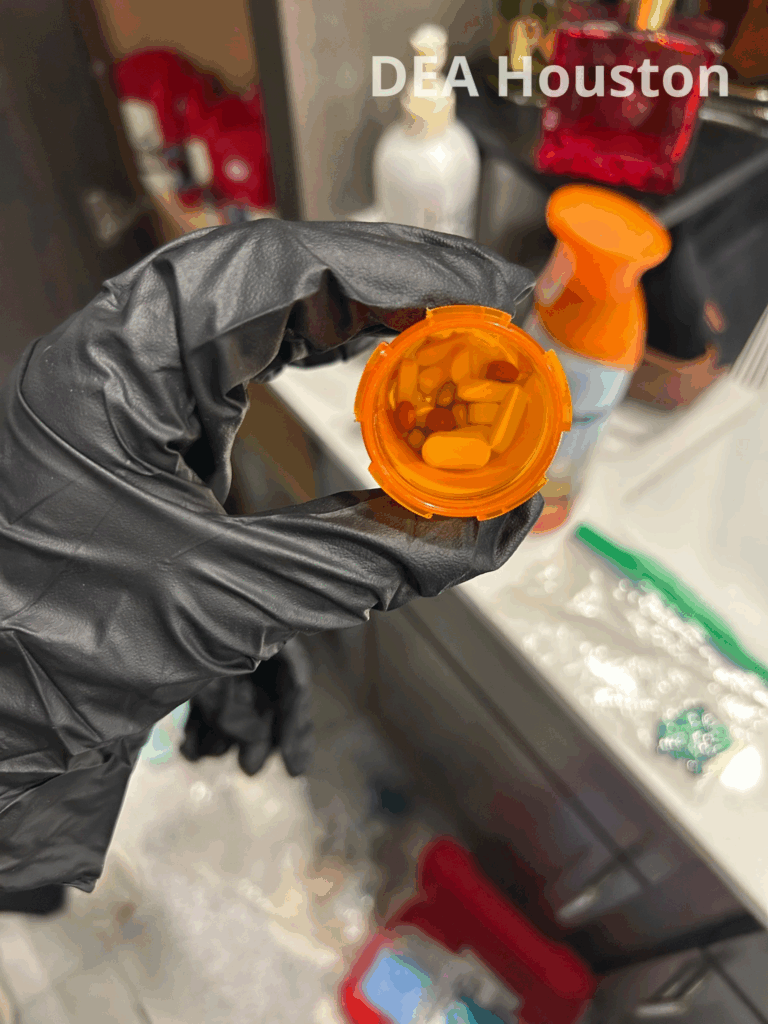
Counterfeit pills continue to pose a serious and growing threat to communities across the country. These pills are often designed to look exactly like legitimate prescription medications and may even be packaged in authentic-looking prescription bottles. Recently, DEA Houston agents seized counterfeit pills containing deadly fentanyl while arresting an individual attempting to sell them locally. Cases like this highlight how easily dangerous substances can be disguised and distributed.
What makes counterfeit pills especially dangerous is that there is no reliable way to identify them by appearance alone. A pill that looks like a common prescription medication may contain fentanyl, a synthetic opioid so potent that a very small amount can be life-threatening. This risk extends beyond intentional misuse. Children, teens, and other family members may accidentally encounter these pills when medications are not securely stored.
The presence of counterfeit pills underscores the importance of prevention at home. Safe storage of prescription medications is a simple but critical step in reducing harm. Medications should be locked up, kept out of reach and sight, and never shared. Unused or expired medications should be disposed of properly rather than kept in drawers, bags, or medicine cabinets where they can be accessed unintentionally.
Safe storage helps prevent accidental poisoning, misuse, and diversion of medications. It also reduces the likelihood that medications can be taken without a parent or caregiver’s knowledge, sold, or mixed with other substances. For families with children and teens, these precautions can make a meaningful difference in safety.
Education, awareness, and responsible medication practices work together to protect individuals and strengthen communities. By staying informed and taking proactive steps at home, families can help reduce the risks associated with counterfeit pills and support a culture of prevention.



Sorry, comments are closed for this post.